

LET'S CONNECT FACE TO FACE
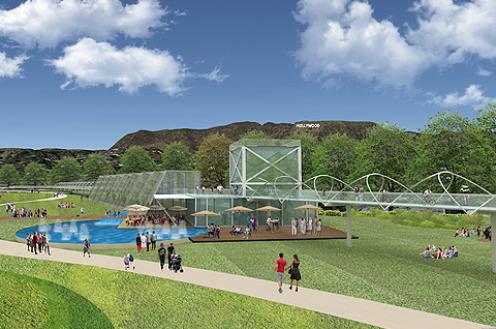
Join us as we once again meet face-to-face at Taglyan Cultural Center in Hollywood to celebrate For the Love of Hollywood Gala: Reconnecting Communities benefitting the Friends of the Hollywood Central Park.
See you there!

Facts and Benefits

The Facts
More than 180,000 people, including 40,000 children live within just one mile of the proposed park
Hollywood has 0.005 acres of open space per resident as compared to 0.012 acres of open space within the City of Los Angeles and is one of the lowest resident-to-park space communities in California
Two-thirds of children in Los Angeles do not live near a park, playground, or other safe place to play. By comparison, New York City’s parks are much more equitably distributed with more than 91 percent of its children living within walking distance of a park
The median income for this one-mile area is $23,481—nearly half the region’s median income level. In addition, 75.2 percent of this one square-mile population is non-white minorities with 53.3 percent of Hispanic ethnicity
Existing park space is disproportionately concentrated in the region’s wealthy neighborhoods. As a result, Latino, African-American, and Asian Pacific Islander youth are dramatically less likely than their White counterparts to enjoy access to open space, playgrounds, and other exercise facilities
The Benefits
Community
Promotes equity
Provides green open space and recreational facilities to more than 40,000 children
Promotes public health and encourages active lifestyles
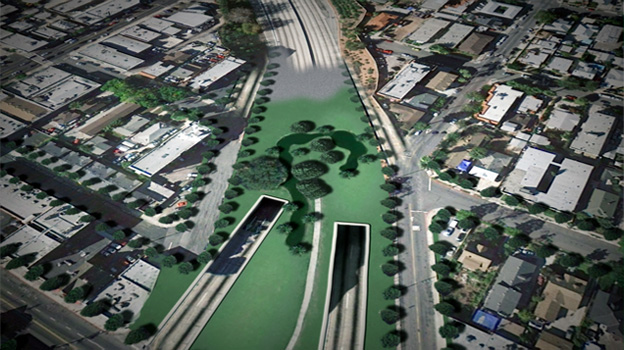
Reunites diverse communities and dense neighborhoods, separated for more than 60 years, by the Hollywood Freeway
Provides an exemplary illustration of efficient and innovative alternative land use
Strategies and outcomes serve as a national model for the creation of new green open space in a dense urban environment
Economy
Creates more than 38,000 direct and indirect jobs, including 30% entry level and apprenticeship programs and local hire
Provides an economic stimulus for investment in resource efficient infill development
Increases tourism
Energy and the Environment
Improves air quality and reduces global warming
Reduces automobile usage and fuel consumption, green house gas emissions and promotes energy efficiency and conservation
Creates a transit oriented development
Utilizes 21st Century cutting-edge environmental technologies
Infrastructure Improvements
Streamlines freeway functioning
Improves freeway overpasses